Upgrade Your Bike Suspension for Better Handling
Many riders find that stock suspension components are designed to accommodate a wide range of riding conditions and rider weights, which often results in a compromise rather than an optimized setup. Upgrading to adjustable components can allow for a more tailored riding experience, particularly when it comes to cornering stability and overall comfort. The process of selecting and installing new fork springs and a rear shock involves understanding how suspension geometry interacts with rider input and road surfaces.
Adjustable suspension components offer the ability to fine-tune factors such as spring preload, compression damping, and rebound damping. These adjustments influence how the bike behaves during braking, acceleration, and cornering. While the goal is often better handling and reduced fatigue, actual outcomes depend on many variables including rider weight, riding style, and the specific terrain encountered. Focusing on the methodology of selection and setup can help riders achieve a setup that suits their needs without implying guaranteed results.
This article explores the roles of fork springs and rear shock options in the context of upgrading from stock equipment. It provides an informational overview of the principles involved, the types of components available, and the general approach to tuning. The emphasis is on understanding the process rather than prescribing a specific outcome.
Understanding Fork Springs and Their Role
Fork springs are responsible for supporting the front end of the motorcycle and absorbing initial impacts from the road. The spring rate, typically measured in kilograms per millimeter or pounds per inch, determines how much force is required to compress the spring a given distance. Stock springs are often chosen to suit an average rider weight, which means lighter or heavier riders may experience either too much sag or insufficient support.
Selecting the correct spring rate is a fundamental step in upgrading front suspension. The goal is to achieve proper static sag and rider sag. Static sag is the amount the suspension compresses under the bike’s own weight, while rider sag includes the rider’s weight. A common approach involves measuring these values with the rider on the bike and adjusting spring preload or replacing springs if the values fall outside target ranges. For example, if rider sag is too high, a stiffer spring may be needed; if too low, a softer spring could be appropriate.
Fork springs are available in linear and progressive types. Linear springs provide a constant rate through the entire travel, which offers predictable behavior for a given rider weight. Progressive springs increase their rate as they compress, which can help absorb both small bumps and larger impacts without bottoming out. The choice between them often depends on the intended use, such as street riding versus track days. Brands like Moto Pulse offer a variety of spring options that can be matched to specific rider needs, but the selection process should be based on measured data rather than assumptions.
Upgrading the Rear Shock: Options and Adjustments
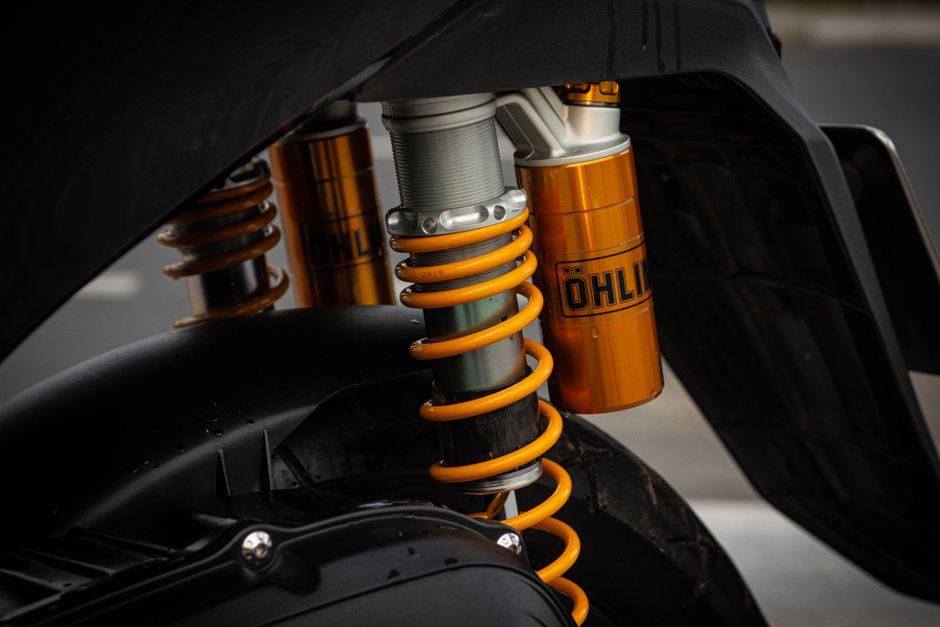
The rear shock works in conjunction with the linkage and swingarm to manage rear wheel motion. Stock shocks frequently have limited adjustability, often only offering preload adjustment. Upgrading to a shock with separate compression and rebound damping adjustments allows for finer control over how the bike responds to acceleration forces and bumps.
Two common types of rear shocks are coil-over and air shocks. Coil-over shocks use a metal spring that provides a consistent rate and are generally easier to set up for a specific rider weight. Air shocks use pressurized air to achieve the spring effect, which allows for quick spring rate changes but can be more sensitive to temperature and air pressure variations. Each type has its own considerations regarding maintenance and performance consistency.
When selecting a rear shock, factors such as ride height adjustment, high-speed and low-speed compression damping, and rebound damping become relevant. High-speed compression damping controls the shock’s response to sharp impacts, while low-speed compression affects how it reacts to gradual weight transfers, such as during braking or cornering. Rebound damping controls how quickly the shock extends after being compressed. Adjusting these settings requires understanding how they interact with the front suspension and the bike’s overall balance.
A process-oriented approach involves starting with baseline settings recommended by the manufacturer and then making small adjustments based on observed behavior. For instance, if the rear feels harsh over small bumps, reducing low-speed compression may help. If the bike tends to squat excessively under acceleration, increasing compression damping or preload might be considered. These adjustments are iterative and depend on the rider’s ability to sense changes.
The Process of Tuning and Setup
Tuning suspension components is a methodical process that begins with establishing correct sag measurements. To measure sag, the bike is first supported so the rear wheel is off the ground, then the suspension is fully extended. A measurement is taken from a fixed point on the axle to a point on the frame. Next, the bike is set on the ground without the rider, and the measurement is taken again to get static sag. Finally, the rider sits on the bike in normal riding position, and a third measurement provides rider sag. These values are compared against recommended ranges, which are often expressed as a percentage of total suspension travel.
If sag values are outside the target range, the first step is to adjust preload. If preload adjustment alone cannot bring sag into the proper range, a spring rate change may be necessary. This is where access to a selection of springs becomes important. After achieving correct sag, damping adjustments can be made. A common starting point is to set all clickers to their factory baseline, then test ride over a known section of road or track. Riders often make one adjustment at a time, noting how the bike behaves during braking, cornering, and over bumps.
It is important to keep records of settings and changes. Doing so helps in understanding how each adjustment affects the ride. Many riders find that a properly set suspension can improve confidence in corners and reduce fatigue over longer rides, though these outcomes are conditional on the rider’s ability to use the adjustments effectively. External factors such as tire pressure, road conditions, and load also play a role.
Considerations for Your Motorcycle
Not all upgrade options are compatible with every motorcycle. The fork diameter, travel length, and internal parts must match the components being installed. Similarly, rear shocks vary in eye-to-eye length, stroke, and mounting hardware. Checking the manufacturer’s specifications or consulting a suspension specialist can help avoid mismatches. Moto Pulse provides detailed fitment guides for its products, but riders should verify compatibility with their specific make and model.
Budget is another consideration. While fully adjustable shocks and cartridge fork kits can be expensive, even basic spring upgrades and preload adjusters can provide noticeable differences for a lower investment. The focus should be on what adjustments are most relevant to the rider’s typical conditions. For example, street riders might prioritize comfort and bump absorption, while track riders often look for precise damping control and stability under heavy braking.
Rider skill also influences how suspension changes are perceived. A less experienced rider may not immediately feel the effects of small damping adjustments, whereas a seasoned rider can detect subtle changes in chassis behavior. Over time, as familiarity grows, the ability to fine-tune improves. Taking the time to learn about suspension dynamics contributes to more informed choices.
Potential Effects and Realistic Expectations
When suspension components are chosen and adjusted based on rider weight and riding style, improvements in handling can often be observed. Cornering may feel more stable because the bike maintains a more consistent geometry under load. Ride comfort may improve because the suspension can more effectively absorb imperfections in the road surface. However, these outcomes are not guaranteed and depend on many interdependent factors.
For instance, a stiffer spring setup might reduce bottoming on large bumps but could transmit more vibration on rough pavement. Conversely, a softer setup might improve initial compliance but lead to excessive pitch or wallow during aggressive riding. The best approach is to view suspension tuning as a balance between competing goals. No single setting works optimally for all conditions.
Furthermore, the skill of the rider in adapting to changes matters. Even a precisely tuned suspension may not yield better handling if the rider does not adjust their riding technique accordingly. External elements such as tire compound, air pressure, and even ambient temperature can influence how the suspension performs. Recognizing these dependencies helps set reasonable expectations and encourages a systematic approach to setup rather than a search for a magic solution.
Ultimately, upgrading suspension components is a process that rewards careful measurement, incremental adjustments, and patience. By understanding the principles behind fork springs and rear shocks, riders can make informed decisions that align with their personal preferences and riding environment. The journey of suspension tuning is as much about learning as it is about the final result.